Opleeuw Castle Estate combines neoclassical architecture with flowering gardens, sightlines, and natural landscapes rich in scent, color, and depth
Castle Estate Opleeuw South-Limburg
Castle Estate Opleeuw South-Limburg
Castle Opleeuw dates back to the 17th century, originally established as a U-shaped complex amid the rolling Haspengouw landscape. In 1877, the castle acquired its current neoclassical form. Today, the estate sits as a tranquil enclave in an open valley, surrounded by fertile slopes, orchards, and meadows.


BuroLandschap oversaw the redesign of the gardens and surrounding landscape, introducing new structures, sightlines, and garden rooms to bring intimacy to the open setting.
Perennials, climbers, and organic planting structures play a central role in the design. Roses are given special prominence in all their forms—from botanical varieties to modern cultivars and moschata hybrids.

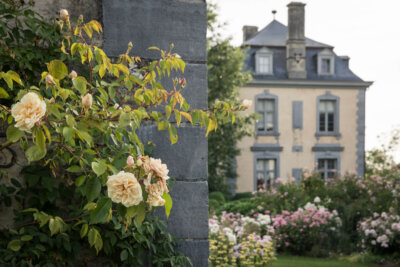
The central courtyard was designed as a lush, flowering space with careful attention to scent, color, and seasonal experience, creating a welcoming arrival on the estate. This part of the garden was realized in collaboration with landscape architect William Werck, a frequent partner of BuroLandschap.

The central courtyard was designed as a lush, flowering space with careful attention to scent, color, and seasonal experience, creating a welcoming arrival on the estate. This part of the garden was realized in collaboration with landscape architect William Werck, a frequent partner of BuroLandschap.


In the broader landscape, flower-rich slopes, meadows, and tree clumps were introduced to create new perspectives and depth, a technique reminiscent of the English landscape style. Centrally positioned between the castle and the surrounding landscape is a natural spring-fed pond, nourished by the estate’s many water sources.


