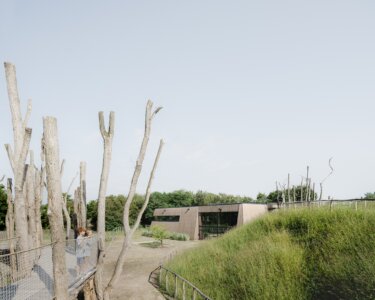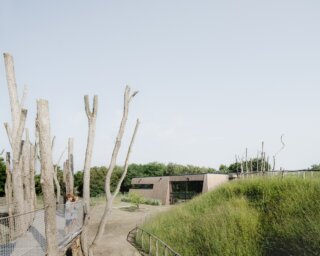
Future Garden in Genk integrates the tapir enclosure into the landscape with rolling hills, the AHA principle, and striking robinia bridges.
Future Garden Genk
Future Garden Genk
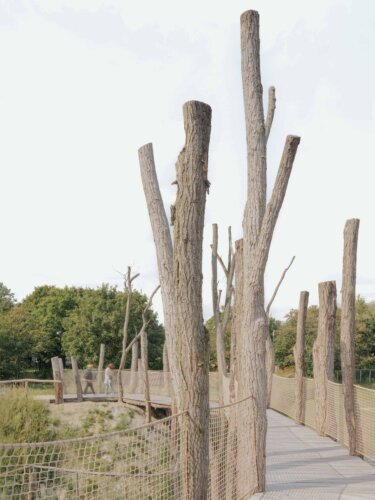
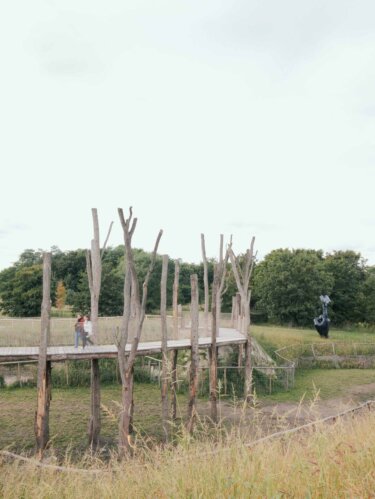
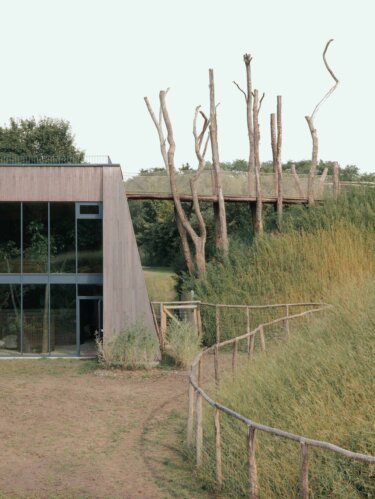
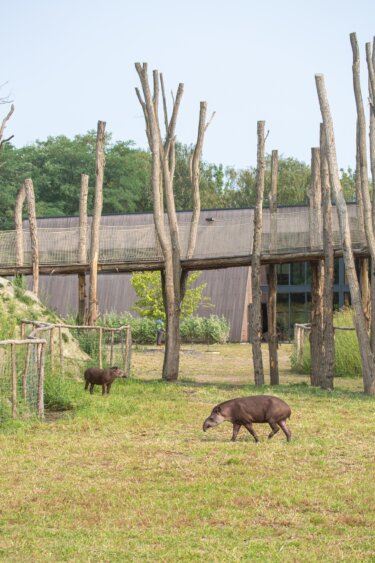
Future Garden is the newest animal enclosure at La Biomista, designed to house tapirs. The enclosure is part of the ongoing development of the site and is landscape-integrated according to the AHA principle, where barriers are minimized or incorporated into the landscape. The highlight of the project is the two tree bridges that wind up to the roof of the Mastaba.
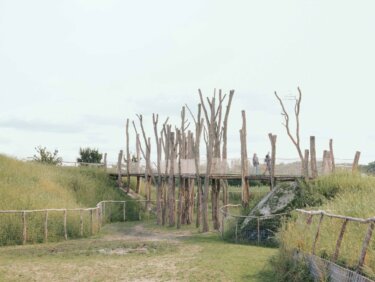
For shaping the terrain, only soil excavated during the construction of the building and other site interventions was used. This soil was modeled into a rolling landscape with high hills around the enclosure. These hills not only conceal technical or disruptive elements but also create a new experiential route to the Mastaba’s roof. From there, visitors enjoy panoramic views of the enclosure and the surrounding park area.
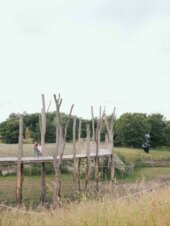
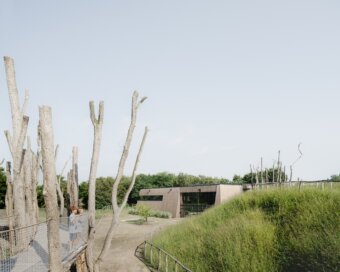
The tapir enclosure was designed following the landscape-oriented AHA principle.
The fencing is integrated into the terrain, making the enclosure visually part of the surrounding landscape. The enclosure sits lower than the walking path, creating a natural boundary without intrusive infrastructure.
A striking feature of the design is the two bridge structures leading to the lookout point. They are supported by robinia trunks up to 15 meters high, sourced from a nearby forest in Genk managed under a local forest management plan. The trunks were minimally processed and planted to form the vertical structure on which the walkways rest.
The robinia bridges make a technical and aesthetic statement but will gradually blend into the landscape as the surrounding forest—still developing on the hills—continues to grow.